
Systematic Frameworks for Market Logic.
Our trading models are built on the intersection of historical data integrity and predictive analytics. Explore the static logic and hypothetical environments where these archetypes operate.

Execution Archetypes
We categorize our predictive research into four distinct model families. Each family addresses a specific market inefficiency, from structural gaps to behavioral momentum.
"Accuracy in trading models is not about predicting the future, but about defining the probabilities of the present."
Mean Reversion Clusters
The M1-Alpha focuses on statistical extremes. It identifies assets that have deviated significantly from their 20-day rolling average without a fundamental catalyst. This model excels in sideways markets where price elasticity is high.
Breakout Structural Velocity
Utilizing predictive analytics to monitor volume consolidation, the M2-Gamma seeks the "coiling" effect before volatility expansion. It is designed for high-conviction directional shifts.
Institutional Order Flow Flux
This model tracks the footprint of large-scale block trades and liquidity absorption. It ignores the "noise" of retail sentiment to focus on where the capital is actually flowing.
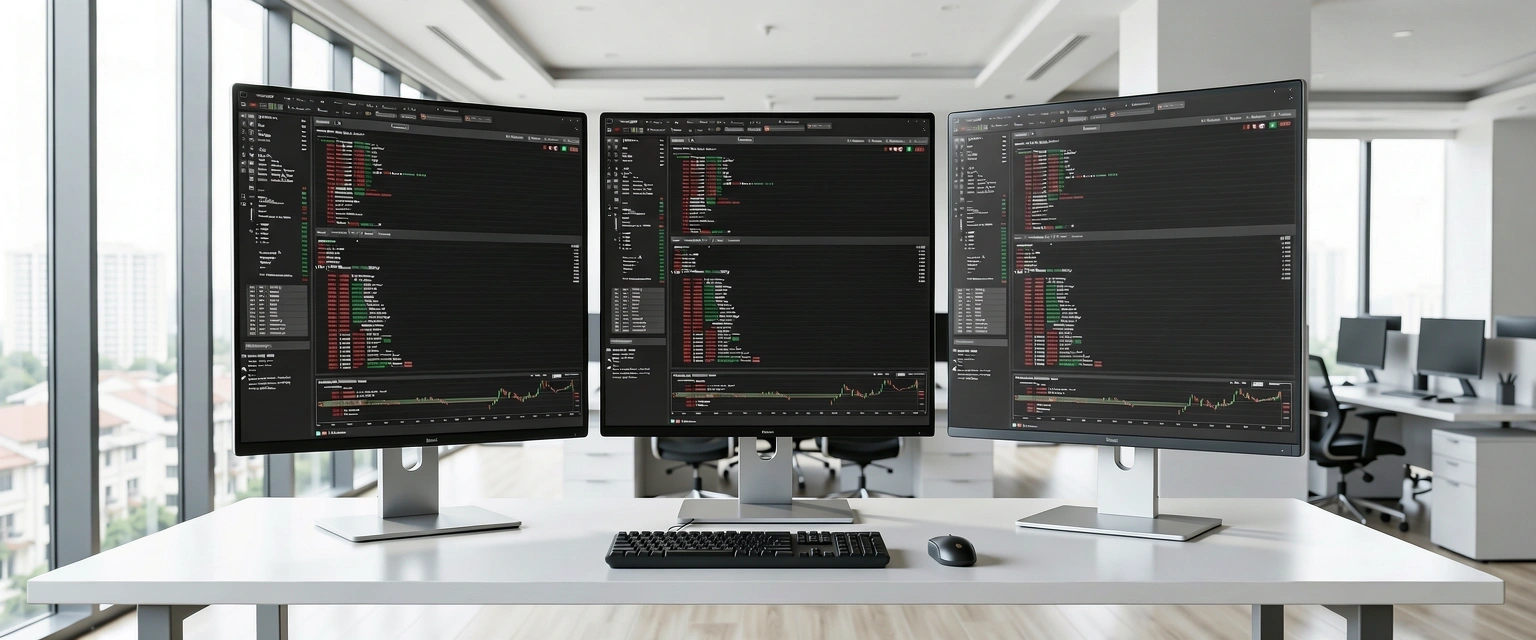
Static Design. Dynamic Potential.
Our models are rigorously backtested through multiple market cycles, ensuring that the logic remains consistent even when the volatility changes.
Analytical Methodology
Input Sanitization
Data is sourced from primary liquidity providers and scrubbed for outliers to ensure the trading models process only clean price action.
Backtesting Rigor
Every model undergoes a 12-month walk-forward analysis before being cataloged in our predictive analytics suite.
Logic Transparency
We avoid "black box" systems. Each model's entry and exit triggers are based on verifiable mathematical principles.
Hypothetical Stress
Models are stress-tested against low-liquidity events and flash volatility scenarios to determine failure points.
Scenario: Systematic Diversification
By deploying the M1-Alpha (Mean Reversion) alongside the M2-Gamma (Breakout), analysts can create a balanced research portfolio. While one capitalizes on range-bound movements, the other captures the emerging trend.
- Optimized for District 1 financial time zones and global trading shifts.
- Supports multi-asset correlation tracking across 20+ pairs.
Real-World Logic Application.
Traditional models fail because they rely on static history. ManilaMode Digital designs trading models that account for the evolving structure of liquidity. We provide the research; you apply the execution.
Ready to upgrade your research pipeline?
Explore our full suite of predictive analytics or contact our lab team in District 1, HCMC for a detailed model overview.